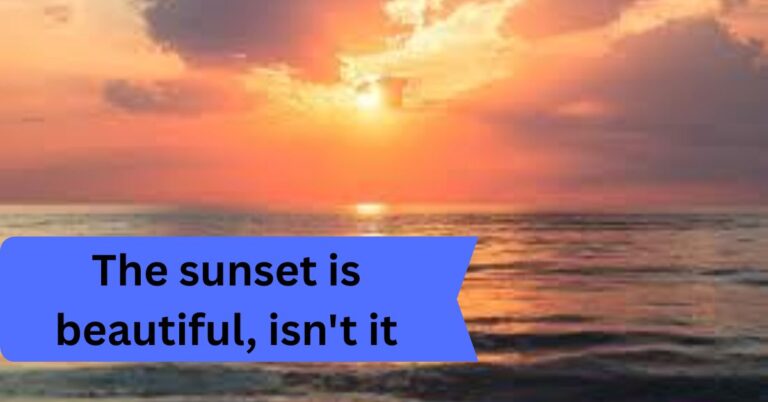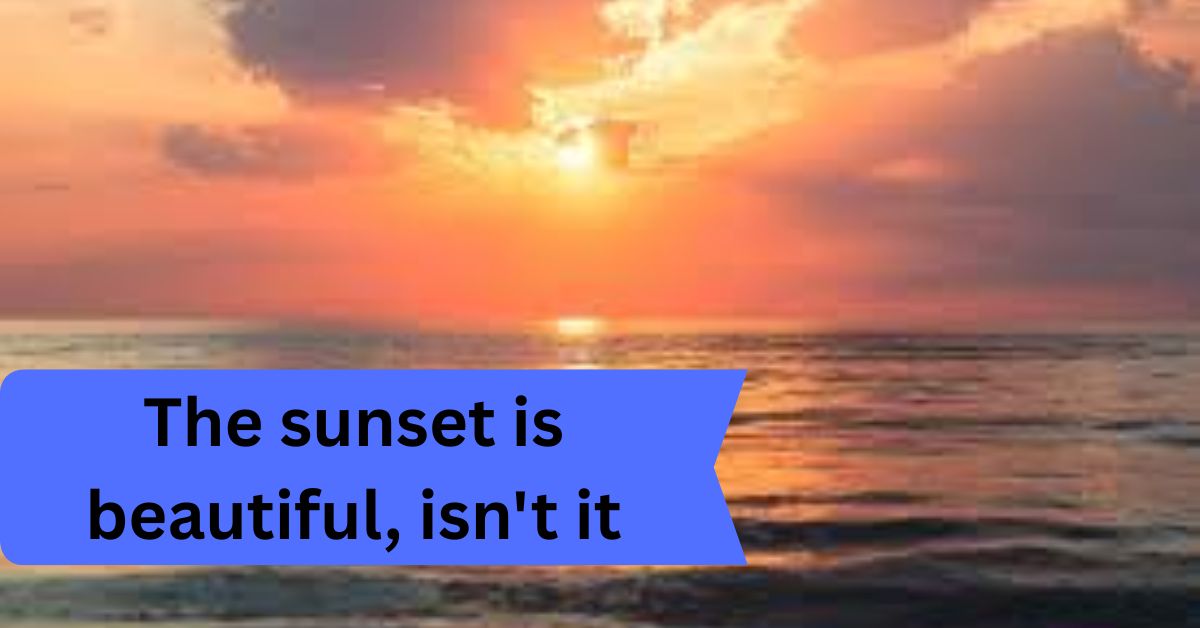
I remember watching the sunset from a quiet beach last summer — the sky turned shades of orange, pink, and purple. It felt like time slowed down, and for a moment, everything was still. That peaceful beauty stayed with me long after the sun dipped below the horizon.
Yes, it truly is — the colors are so calming and magical. There’s something about sunsets that makes everything feel peaceful, even if just for a moment.
In this article, we discuss about” The sunset is beautiful, isn’t it?”
Table of Contents
The Sunset Is Beautiful, Isn’t It?—A Complete Guide to Nature’s Daily Masterpiece:
The sunset is beautiful, isn’t it? That simple question has been asked countless times by people all around the world. Whether spoken on a beach at twilight, whispered on a long drive home, or posted beneath a photograph on social media, the phrase carries with it a sense of awe, wonder, and quiet reflection.
Sunsets are one of nature’s universal gifts. No matter where you live, what language you speak, or what stage of life you’re in, watching the sun slip below the horizon can stop you in your tracks. It’s a moment of peace in the rush of daily life, a reminder of beauty that requires nothing from us but attention.
In this guide, we’ll explore the meaning of sunsets, the science behind their beauty, cultural and spiritual significance, and why the phrase “The sunset is beautiful, isn’t it?” resonates so deeply with people across generations.
Why Do We Find Sunsets Beautiful?
Before diving into symbolism and deeper meaning, let’s consider a simple question: Why are sunsets so universally admired?
1. Colors That Stir Emotion:
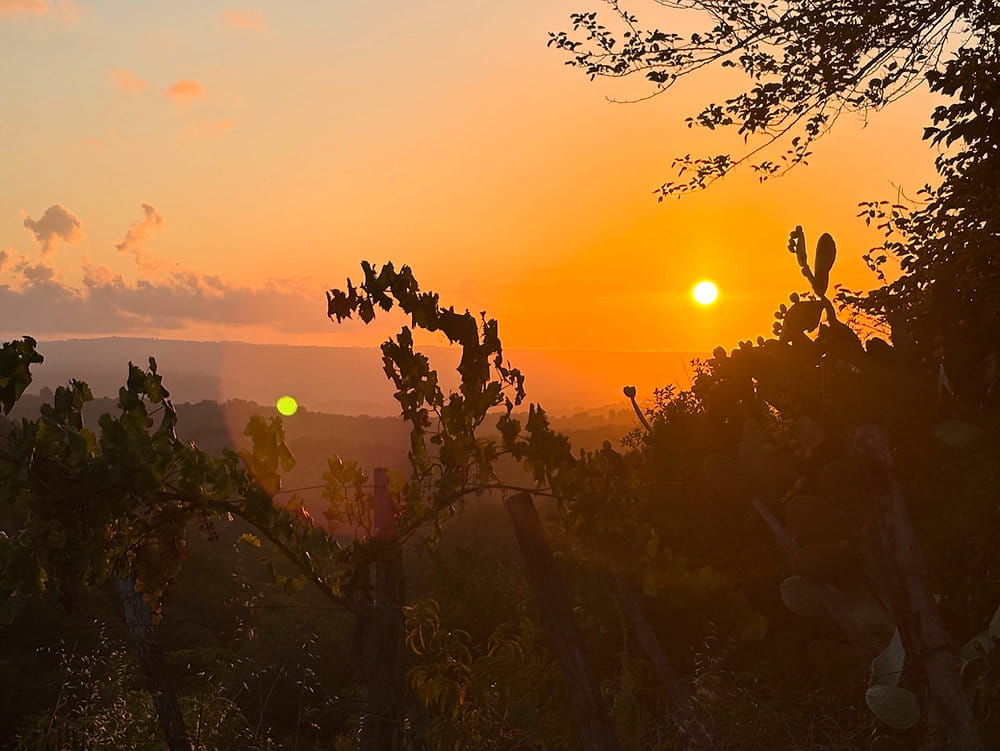
The fiery oranges, soft pinks, and deep purples of a sunset trigger emotional responses. Psychologists suggest warm colors often evoke feelings of passion, comfort, and nostalgia, while cooler tones bring calmness and introspection.
2. The Natural Pause in the Day:
Unlike many natural events, sunsets are predictable. We know they happen every day, yet they never lose their magic. This predictability makes them a natural cue to pause, breathe, and reflect.
3. Beauty in Transience:
Sunsets don’t last long. Their fleeting nature makes them special, reminding us that beauty often lies in moments that cannot be held forever.
4. The Science Behind a Sunset:
Even though sunsets feel magical, there’s a fascinating scientific explanation for their breathtaking beauty.
5. Rayleigh Scattering:
Sunsets occur because sunlight passes through more of Earth’s atmosphere as the sun lowers in the sky. Shorter wavelengths of light (like blue and violet) scatter out, while longer wavelengths (red, orange, and pink) dominate the view.
6. Atmospheric Conditions:
Dust, water droplets, and pollution can all intensify or soften sunset colors. This is why sunsets look different after a storm, near oceans, or in deserts.
7. Geographical Influence:
Mountains, lakes, and open skies influence how sunsets are perceived. That’s why a sunset in Santorini feels different from one in the Sahara, even though the science is the same.
Sunsets in Culture and Symbolism:
Human cultures have long attached deep symbolism to sunsets. They represent endings, transitions, and the promise of renewal.
1. In Literature and Poetry
Writers often use sunsets to symbolize closure, longing, or reflection. A sunset marks the end of a chapter, whether in a story or in life.
2. In Spirituality:
- In Buddhism and Hinduism, sunsets can symbolize detachment and the cycle of rebirth.
- In Christianity, sunsets often represent God’s artistry and the gift of daily renewal.
3. In Art and Photography:
From Monet’s paintings to Instagram feeds, sunsets remain one of the most captured subjects. They represent timeless beauty that transcends styles and trends.
Sunsets and Human Emotion:
Why do sunsets make us feel so deeply?
1. A Sense of Closure:
The day ends with the sunset, offering a natural point for reflection. It’s why people often feel more nostalgic at twilight.
2. Romantic Associations:
Couples walking on the beach, first dates ending at dusk, or proposals set against the golden sky—all reinforce the link between sunsets and love.
3. Calm and Healing:
Studies show that watching sunsets can reduce stress, lower heart rates, and boost mental well-being. Nature’s artistry genuinely heals.
The Sunset in Everyday Life:
While sunsets are dramatic events, they also blend seamlessly into daily life.
1. On Road Trips:
Travelers often remark on sunsets during long drives, when the changing colors on the horizon bring peace after miles of monotony.
2. On Social Media:
A quick scroll through Instagram or TikTok shows how often people share sunsets with the caption: “The sunset is beautiful, isn’t it?” It’s a phrase that connects strangers worldwide.
3. Personal Reflection:
For some, sunsets are tied to personal rituals—journaling, meditating, or simply sitting in silence as the day fades.
Quotes That Capture the Magic of Sunsets:
Throughout history, many thinkers, poets, and dreamers have tried to capture what makes sunsets special. Here are a few lines that echo the spirit of “The sunset is beautiful, isn’t it?”:
- “A new dawn is promised with every sunset.” Ralph Waldo Emerson
- “Sunsets are evidence that every day can end beautifully, regardless of what happens.” Kristen Butler
- “The sun’s fiery kiss to the night is a sunset.” Crystal Woods
- Each of these reflects the shared awe people feel when watching the sky transform.
The Sunset as a Metaphor for Life:
Perhaps the reason sunsets move us so much is because they reflect truths about our own lives:
1. Impermanence
Just as sunsets fade quickly, so too do moments in life. This impermanence teaches us to cherish what we have now.
2. Transitions
Sunset marks the shift from day to night, symbolizing changes in our own journeys—whether it’s moving on from a chapter in life, letting go of something painful, or embracing new beginnings.
3. Shared Experience
Sunsets are one of the few natural events experienced globally, creating a sense of unity.
Famous Sunsets Around the World:
If sunsets are universal, some locations are especially famous for them:
- Santorini, Greece – Known for its golden skies reflecting over whitewashed buildings.
- Grand Canyon, USA – The layered rocks change colors dramatically at sunset.
- Maldives – Overwater bungalows silhouetted against fiery skies create postcard perfection.
- Kyoto, Japan – Traditional temples glowing under the fading sun create a spiritual experience.
Each of these places reminds us that “The sunset is beautiful, isn’t it?” can take on different flavors depending on where you stand.
How to Make the Most of a Sunset
Instead of letting sunsets pass unnoticed, here are a few ways to deepen your experience:
1. Be Present:
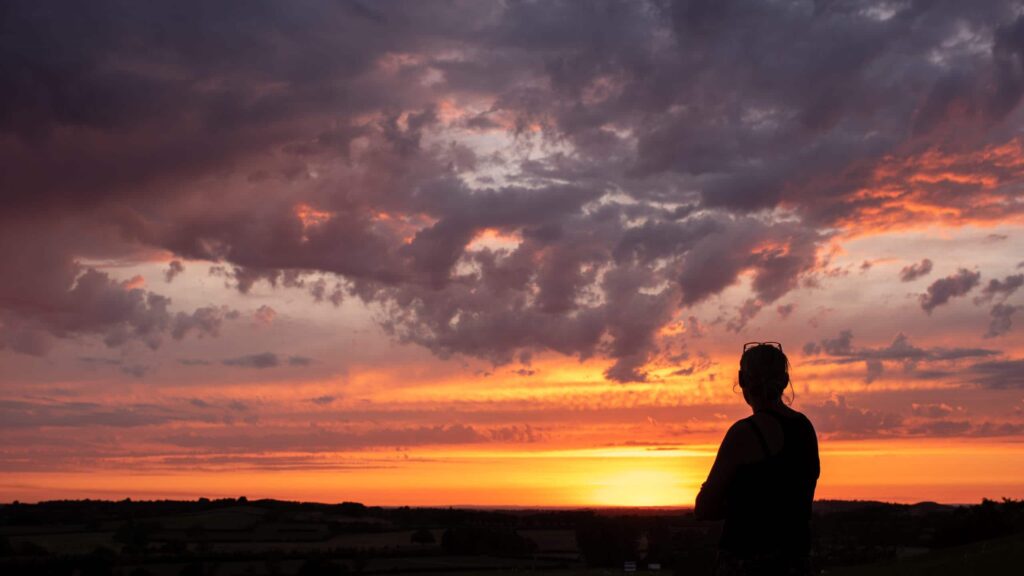
Put away your phone for a few minutes. Absorb the shifting colors with your own eyes.
2. Share the Moment:
Watching with friends, family, or a partner often makes the memory stronger.
3. Reflect or Journal:
Use the moment as a daily reflection: What went well today? What can I release?
4. Photograph Mindfully:
Photos can preserve memories, but don’t let capturing the perfect shot steal the magic of the present.
Why This Phrase Resonates:
At its core, the phrase “The sunset is beautiful, isn’t it?” is more than observation. It’s an invitation.
- It invites connection: asking someone else to share the moment.
- It invites mindfulness: reminding us to pause.
- It invites gratitude: encouraging us to see beauty in everyday life.
Simple words, but powerful meaning.
Frequently Asked Questions:
1. What is the meaning of “The sunset is beautiful, isn’t it?”
It’s a poetic way to express admiration for the beauty of a sunset. Sometimes, it’s also used to subtly express deeper emotions or feelings.
2. What is meant by “The sunrise is beautiful, isn’t it?”
This phrase highlights the serene and inspiring beauty of a sunrise, often symbolizing hope, renewal, or new beginnings.
3. What should I reply to “The moon is beautiful, isn’t it?”
You can say, “Yes, it’s stunning,” or, if you understand the hidden meaning (in Japanese culture, it’s a poetic way of saying ‘I love you’), you might respond with a smile or a heartfelt reply.
4. What does “The sun is beautiful, isn’t it?” mean in Japanese?
While not as famous as the moon version, it could be interpreted as a poetic admiration, possibly suggesting warmth, brightness, or strong emotions.
5. What is meant by “The moon is beautiful, isn’t it?”
In Japanese literature, it’s a subtle way to say “I love you,” expressing feelings through nature instead of direct words.
6. What does the phrase “The swan is beautiful, isn’t it?” mean?
It’s a compliment to appreciate the swan’s grace and elegance. Metaphorically, it could refer to someone who is serene on the outside but strong underneath.
7. Why does “The moon is beautiful” mean “I love you” in Japanese?
Author Natsume Sōseki suggested this poetic phrase as a culturally appropriate, indirect way to express love, fitting the subtlety of Japanese expression.
8. What is a metaphor like “The sunset is beautiful, isn’t it?”
It’s a metaphor for fleeting beauty, peace, or even the end of something meaningful—often used to express deep emotions without being literal.
9. What is the meaning of “sunset girl”?
It usually refers to a girl who loves sunsets or embodies the calm, warm, and dreamy vibe associated with them.
10. What do you call a girl who loves sunsets?
You might call her a “sunset lover,” “sunset soul,” or poetically, a “sunset chaser”—someone who finds joy and peace in watching sunsets.
Conclusion:
The sunset is beautiful, isn’t it? This simple phrase reminds us of the extraordinary beauty hidden in ordinary moments. Sunsets symbolize peace, closure, and the promise of a new beginning, while also connecting us to people, cultures, and emotions across the world. They inspire art, poetry, love, and reflection, proving that nature’s beauty needs no translation.
Each sunset is fleeting, yet unforgettable—a gentle reminder to pause, breathe, and appreciate life as it is. So next time you watch the sun dip below the horizon, share the moment, and let its beauty fill your heart.
About the Author